
Key Takeaways
- Most residential HVAC companies net between 5% and 12% of revenue, while the best-run operations consistently exceed that range.
- Gross margin on service and repair work should be 50% or higher, while installation margins tend to be lower due to equipment and labor costs.
- The biggest margin killers in HVAC are billable hour inefficiency, unreconciled material costs, unreviewed overhead, and marketing spend with no cost-per-lead tracking.
- Proven margin fixes include correcting your pricing model, optimizing dispatch, reducing callbacks, training technicians on diagnostic presentation, selling maintenance agreements, and auditing overhead quarterly.
- Core Growth Group works with HVAC operators across the Texas Triangle who want higher margins and clearer financials, backed by a team that owns and operates service businesses in the same market.
What Is a Profit Margin & Why It Matters for HVAC?
Profit margin is the percentage of revenue your business keeps after expenses. Every HVAC owner needs to know two numbers cold: gross profit margin and net profit margin.
Gross margin tells you what’s left after direct job costs, including labor and materials. Net margin tells you what’s left after everything, including overhead, insurance, vehicles, software, and owner pay. A company can run a 45% gross margin and still net only 6% if overhead is bloated or untracked. That’s why both numbers matter.
Most margin problems in HVAC are fixable. Correcting your pricing model, reducing callbacks, and building a maintenance agreement base are among the highest-impact moves an HVAC operator can make. Each one targets a different layer of the P&L, and stacking them compounds the improvement over time.
Clint, the founder of Core Growth Group, has worked through these exact margin issues as an operator himself, not just as an outside advisor. That operator perspective shapes every recommendation below.
Core Growth Group: Skip the Broker. Sell Direct to a Strategic Buyer.
Operator-Led Acquisitions | Texas Triangle Focus

Built by an Operator, for Operators: Core Growth Group acquires HVAC and plumbing service businesses across Dallas-Fort Worth, Houston, Austin, and San Antonio. Founder Clint runs his own service business (Hill Country Plumber) and buys directly, so qualified sellers skip the listing process entirely and avoid the 89% of brokered businesses that never close.
Why Sellers Choose Core Growth Group:
- ✓Direct strategic buyer, not a broker or private equity firm
- ✓High-level consulting to prepare your business for maximum valuation
- ✓Grow, Prepare, or Exit framework tailored to your stage
- ✓Texas-based operator who understands service business realities
Your business deserves a buyer who gets it.
Average HVAC Business Profit Margins by Benchmark Tier
Net Profit Margin
The average net profit margin for a residential HVAC company falls between 5% and 12%. That’s a wide range, and most businesses in the lower half are there because of reactive pricing, poor job costing, or overhead that has grown faster than revenue.
High-performing HVAC companies may regularly report net margins of 15% to 20% or higher. A net margin of 12% or above is generally the threshold for a business that is generating real, reinvestable profit rather than just covering its costs.
Gross Profit Margin
Gross profit margin for HVAC businesses should sit at or above 50% for service and repair work. Installation work typically carries a gross margin between 35% and 50% because of higher material costs and longer labor hours.
How Company Size Affects Overhead & Net Margin
Smaller HVAC operations (under $1M in revenue) often run leaner overhead structures, which can protect net margin even with lower gross revenue. As companies scale past $2M to $5M, overhead typically increases faster than systems and pricing can keep up, temporarily compressing net margin.
Businesses that break through that compression implement departmental tracking, flat-rate pricing, and recurring revenue streams before they need them.
What Costs Are Eating Into HVAC Margins?
Labor Costs & Billable Hour Inefficiencies
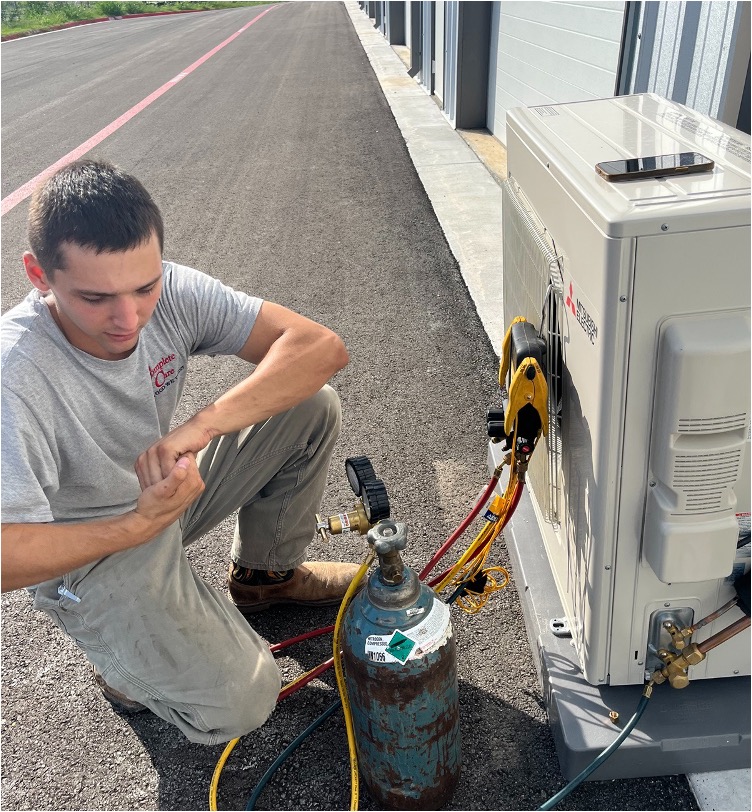
Labor is the highest controllable cost in any HVAC operation, and billable hour efficiency is where most of it gets lost. Drive time, callbacks, parts runs, and poor dispatch sequencing are the most common culprits.
Tracking your labor efficiency ratio, which is billable hours divided by total paid hours, is one of the most direct ways to identify where field labor margin is leaking.
Materials, Equipment, & Job Costing Errors
Material costs are frequently underestimated at the point of quoting and then never reconciled after the job closes. When actual material costs come in higher than quoted, the cumulative effect across hundreds of jobs per year erodes margin significantly.
Implementing a consistent job costing process that compares estimated versus actual costs on every job is non-negotiable for any HVAC business serious about its margins.
Overhead Costs Most Owners Fail to Track
Fixed overhead is the category that surprises most HVAC owners when they finally sit down and itemize it.
Vehicle depreciation, software subscriptions, shop space, liability insurance, and administrative salaries all count against net margin, and most owners are carrying costs they haven’t reviewed in over a year.
The most commonly overlooked overhead items in HVAC businesses include owner vehicle personal-use allocations, software tools that auto-renew without ROI review, and warehouse or storage costs that aren’t assigned to any specific job or department.
Because overhead allocation affects tax treatment and financial reporting, review these categories with your CPA or bookkeeper before making changes, so any adjustments are reflected correctly on your books.
Marketing Spend & When It Hurts More Than It Helps
Marketing spend becomes a margin problem when it’s not tied to cost-per-lead and cost-per-acquisition targets by service line.
An HVAC company spending 12% of revenue on marketing without tracking which campaigns produce install leads versus service calls is essentially funding growth at the expense of profitability.
7 Proven Ways to Improve Your HVAC Profit Margins
1. Fix Your Pricing Based on Actual Costs
Most companies that are underperforming on margin are pricing from memory or competition rather than from cost. When you don’t know your true cost per billable hour, every quote is essentially a guess.
The shift to flat-rate pricing is one of the highest-impact moves an HVAC company can make. It removes the customer’s ability to clock-watch, increases perceived value, and, when built correctly, protects your margin on every ticket, no matter how fast or slow the job goes.
2. Train Technicians to Increase Average Ticket Size
Your technicians are your primary revenue generators, and their ability to identify and present additional needs directly impacts average ticket size and gross margin per visit.
A technician who consistently presents system health findings, filter upgrades, IAQ add-ons, or surge protection generates more revenue per truck roll than one who fixes only the reported issue and leaves. Structured training on diagnostic presentation, not sales scripts, is what makes the difference.
3. Optimize Dispatch to Maximize Billable Hours
Dispatch sequencing is an underrated profit lever. Routing technicians inefficiently, like long drive times between calls, mismatched skill sets to job types, or poor geographic clustering, eats billable capacity without showing up as an obvious line item on any report.
Every hour a technician spends driving is an hour not generating revenue. Smart dispatch means matching the right technician to the right job type, clustering calls geographically, and protecting high-skill technicians for high-margin work.
4. Reduce Callbacks & First-Visit Failures
Every callback costs you a truck roll, a technician’s time, and customer trust, all with zero revenue attached. On a typical service ticket priced at 50% gross margin, a single callback can cut that margin to zero once you account for the return trip.
Tracking callback rate by technician is one of the fastest ways to identify training gaps before they become margin gaps. Best-in-class companies target a first-visit resolution rate above 90%.
5. Sell More Maintenance Agreements for Recurring Revenue
Agreement holders tend to convert to replacement customers at higher rates than one-time service customers. They also generate predictable, schedulable visits that fill slow periods without relying on inbound demand.
Train technicians to present the value on every service call: priority scheduling, discounted repairs, and annual system health checks.
6. Track Job Profitability by Service Line
If you are only looking at total revenue and total expenses at the end of the month, you are managing your business blindfolded. Run job-level profitability reports segmented by service line, such as installs, service calls, maintenance, and commercial versus residential.
That visibility tells you exactly which work is carrying the business and which is quietly dragging margins down. AI tools built to track finances and follow up with leads can make this reporting far less manual, giving owners real-time visibility instead of a once-a-month scramble to reconcile numbers.
7. Review Overhead Costs by Department Regularly
Overhead is not a set-and-forget category. Costs that were reasonable at $800,000 in revenue can become margin killers at $1.5M if you haven’t reviewed them as the business scaled.
Schedule a formal overhead review at least quarterly, broken out by department: field operations, dispatch, administration, and marketing. The goal is to assign every overhead cost to a function and ask whether it is earning its place in the P&L.
Protect Your HVAC Margins with Core Growth Group
HVAC margins do not improve by accident. Every percentage point of net margin you recover comes from a specific fix: better pricing, tighter overhead, smarter dispatch, or stronger technician performance. Businesses that consistently hit double-digit net margins build systems to protect them.
At Core Growth Group, we work with HVAC operators across the Texas Triangle who know their margins should be higher but need help identifying exactly where the money is going. We own and operate service businesses ourselves, so every recommendation starts with someone who reads the same P&L you do. Book a call with Core Growth Group to find out where your margins are leaking and what it takes to fix them.
Frequently Asked Questions (FAQs)
What is considered a good profit margin for an HVAC business?
A good net profit margin is 12% or above. This means the business is generating enough after-tax cash to reinvest in growth, compensate the owner at market rate, and maintain a financial cushion for slow seasons.
How can an HVAC company improve profit margins without raising prices?
The fastest wins come from dispatch optimization and overhead auditing because they require no customer-facing changes. From there, reducing callbacks, selling maintenance agreements, and training technicians to present diagnostics add margin over time.
Which HVAC services are the most profitable?
Maintenance agreements and flat-rate demand service calls are consistently the highest-margin service lines in residential HVAC. New system installations generate the largest ticket sizes but carry the thinnest gross margins due to equipment costs and competitive bidding.
How long does it take to improve HVAC profit margins?
With focused changes, many contractors see measurable margin improvement in 3–6 months, with larger gains over 12–18 months. Quick wins often come from: better pricing on service calls, improved call answer/booking rates, and reducing callbacks. Deeper operational changes (job costing, service mix, overhead structure) compound over time.
Why are my HVAC profit margins lower than industry averages?
The cause is almost always pricing that does not reflect true fully loaded costs, overhead that has grown faster than systems can manage, or a service mix too heavily weighted toward low-margin installs.
Core Growth Group works with HVAC operators to diagnose exactly where margins are leaking through P&L analysis, job costing reviews, and operational assessments. They also acquire and operate service businesses directly, which means the advice comes from the same financial realities you deal with every day.
*Disclaimer: This content is for informational purposes only and should not be considered business, financial, legal, or tax advice. Results vary based on market conditions and individual business circumstances. To learn more about scaling, preparing, or exiting your business, visit Core Growth Group.
Want to Know What Your Company Could Be Worth?
Answer a few quick questions so Clint can understand where your company is today and what next step may make the most sense.
Get Company Valuation