
Key Takeaways
- Most plumbing businesses stall between $3M and $6M, not because of weak demand, but because the systems that worked at $1M cannot support a $5M operation. Fixing that starts with consolidating dispatch, invoicing, and reporting onto a single field service platform with AI add-ons that prevent missed calls and surface margin leaks.
- Labor is the single biggest constraint on plumbing growth, and operators who treat recruiting and retention like a marketing function, with paid ads for technicians, apprenticeship pipelines, and performance-based pay, are the ones building the crew capacity needed to scale past $5M.
- Winning local search in 2026 means maintaining a 4.7+ star average across hundreds of reviews, running Local Services Ads, and building a Google Business Profile that consistently ranks above national franchises for high-ticket jobs like slab leaks and water heater replacements.
- Buyers value plumbing businesses on a multiple of EBITDA, not revenue, so moving a $5M shop from 12% to 18% EBITDA can increase the valuation by $900K to $1.2M at a 3x to 4x multiple without adding a single dollar of top-line revenue.
- Core Growth Group works with plumbing operators across the Texas Triangle through a Grow, Prepare, or Exit framework, and for qualifying businesses, founder Clint buys directly, which means sellers skip the listing process and avoid the 89% of brokered businesses that never close.
Why Do $3M–6M Plumbing Operators Stall and What Actually Scales in 2026?
Most plumbing business owners hit a ceiling somewhere between $3M and $6M, and demand is not actually the issue. The U.S. plumbing market is large, fragmented, and growing, but the systems that got an operator to $3M actively block the path to $10M. Dispatch becomes a daily fire drill; crews turn over faster than they can be trained; lead flow flatlines; and revenue grows without earnings keeping pace.
Scaling past that ceiling in 2026 comes down to five strategies: consolidating operations onto a single field service platform with AI on top, building a real recruiting and retention engine for crews, dominating local search and reviews in your service area, pricing and operating for EBITDA instead of just top-line revenue, and using strategic acquisition to compress years of organic growth into months.
At Core Growth Group, we work with Texas Triangle plumbing operators at every stage of that scaling journey through our Grow, Prepare, or Exit framework, meeting you wherever you are.
Core Growth Group: Skip the Broker. Sell Direct to a Strategic Buyer.
Operator-Led Acquisitions | Texas Triangle Focus

Built by an Operator, for Operators: Core Growth Group acquires HVAC and plumbing service businesses across Dallas-Fort Worth, Houston, Austin, and San Antonio. Founder Clint runs his own service business (Hill Country Plumber) and buys directly, so qualified sellers skip the listing process entirely and avoid the 89% of brokered businesses that never close.
Why Sellers Choose Core Growth Group:
- ✓Direct strategic buyer, not a broker or private equity firm
- ✓High-level consulting to prepare your business for maximum valuation
- ✓Grow, Prepare, or Exit framework tailored to your stage
- ✓Texas-based operator who understands service business realities
Your business deserves a buyer who gets it.
5 Scaling Strategies to Grow a Plumbing Business
1. Build a Tech Stack
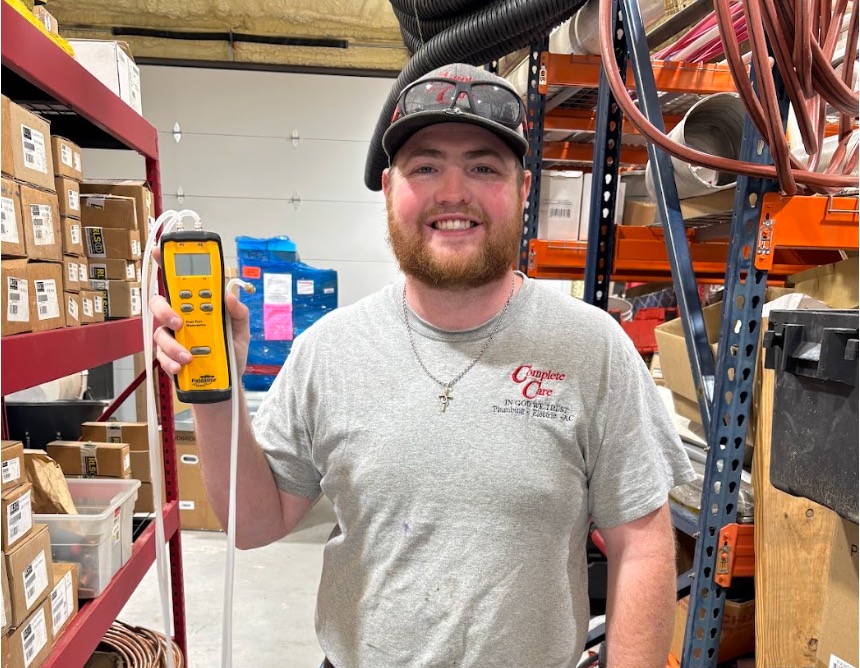
Most $3M–6M plumbing operators run on a patchwork of group texts, paper job sheets, and a basic CRM. That setup may work at $1M, but it collapses at $5M. The highest-advantage move is consolidating dispatch, invoicing, call recording, and reporting into a single field service management (FSM) platform.
FSM platforms vary significantly by company size. ServiceTitan is generally geared toward larger operations with 20+ technicians, with operators reporting first-year costs of roughly $50,000–$70,000+ for a 10-tech business once subscriptions, implementation, and add-ons are included. Housecall Pro is often a better fit for smaller teams, with plans ranging from about $59/month for Basic to $299/month for MAX.
AI add-ons like call-answering bots, automated review requests, and predictive routing now run on top of these platforms, preventing your CSRs from missing calls. The point is the data. Once dispatch, jobs, and revenue live in one system, you can see which trucks are profitable, which technicians upsell, and where revenue is leaking out.
2. Recruit & Retain Crews
The real constraint on plumbing is labor. Plumber wages have been rising roughly 3%–5% annually, with entry-level rates in the most competitive markets climbing about 4% year over year based on industry reports.
Companies that quietly built recruiting pipelines 12–18 months ago now have surplus capacity and pricing power; everyone else is bidding against them. To scale from 4 to 10 crews, treat hiring like marketing: paid ads for technicians, sponsored apprenticeship programs, and structured referral bonuses.
Retention matters just as much. Clear career paths, ride-along training, performance-based pay, and dispatchers who treat technicians like internal customers all help keep good people on the team. And every veteran tech you keep is one you do not have to replace at a premium next year.
3. Win Local Search & Reviews in Service Area
46% of all Google searches carry local intent, and 76% of “near me” mobile searchers visit a related business within 24 hours. The result Google surfaces first effectively wins the job, and reviews decide who gets the call. With 68% of consumers considering only businesses rated 4 stars or higher, a polished Google Business Profile, paired with Local Services Ads and a 4.7+ star average across hundreds of reviews, is the most efficient lead engine in the trades.
Treat reviews as a daily operations metric. AI-powered review request tools can automatically send an SMS after every paid job, removing the step that most operators skip. Pair that with technician scoreboards tied to star averages and same-day responses to anything under 4 stars. Keep your Business Profile stocked with current job site photos too, since Google says profiles with photos drive measurably more direction requests.
Pair this with a service-area-targeted website that has separate pages for Dallas-Fort Worth, Houston, Austin, and San Antonio neighborhoods, and Google will start routing urgent, high-ticket calls (water heater replacements, slab leaks, sewer line jobs) to you instead of national franchises.
4. Price for EBITDA
Owners think in revenue; buyers think in earnings. Most service businesses in the $3M–6M range are valued on a multiple of EBITDA, not revenue. A typical baseline is around 3x earnings, and a credible 20%–30%+ year-over-year growth story can support 4x, which materially changes eventual net proceeds.
Scaling profitably means flat-rate pricing for books, mandatory job costing on every ticket, and dispatch decisions that protect gross margin over raw truck utilization. If a $5M business runs at 12% EBITDA, that is $600K in earnings. Moving that to 18%, without growing revenue at all, adds $300K in annual earnings and can lift valuation by $900K–$1.2M at a 3x–4x multiple.
Top-line growth without margin discipline is just bigger numbers and the same disappointing exit.
5. Use Strategic Acquisition
Growing organically from $4M to $10M+ typically takes more than a couple of years. Acquiring one or two complementary plumbing or HVAC businesses in the same metro can compress that timeline to 18–24 months. The economics often work in the buyer’s favor through shared dispatch, consolidated marketing spend, cross-trained crews, and a single back office.
Operators planning to acquire need three things: clean financials, a documented operating playbook the acquired business can plug into, and a real thesis (geographic infill, crew expansion, commercial book). Operators planning to be acquired eventually should be running their business the same way, with documented systems, clean books, and a transition-ready org chart.
Top 5 Scaling Strategies for Plumbing Business: Summary Table
| # | Strategy | Best Fit | Time to Impact | Primary Outcome |
| 1 | Consolidate on one FSM + AI stack | $2M+ operators on patchwork tools | 3–6 months | Dispatch visibility, margin data |
| 2 | Build a recruiting + retention engine | Any operator adding 2+ crews | 6–12 months | Capacity and pricing power |
| 3 | Dominate local SEO, reviews, LSAs | Residential service businesses | 3–9 months | Lower CAC, higher ticket calls |
| 4 | Price and operate for EBITDA | $3M+ operators eyeing exit | 6–12 months | Higher multiple at sale |
| 5 | Acquire complementary shops | Operators ready for $10M+ | 12–24 months | Step-change in revenue + earnings |
Ready to Grow Your Plumbing Company With Core Growth Group?

The plumbing operators winning in 2026 are the ones treating growth as a discipline, not a hope. Better systems, sharper crews, stronger margins, and in many cases well-timed acquisitions are what move a business from comfortable to genuinely valuable. The owners who put those pieces in place over the next 12 to 24 months are the ones who get to choose their next chapter on their own terms.
At Core Growth Group, we work alongside plumbing operators across Dallas-Fort Worth, Houston, Austin, and San Antonio on exactly that. Founder Clint runs his own service company and acquires other service businesses directly, so the conversation starts with someone who has actually scaled a plumbing shop. If you’re looking to grow your plumbing business faster and with fewer costly mistakes, start a conversation with Core Growth Group today.
Start The Conversation With Core Growth Group.
Frequently Asked Questions (FAQs)
How long does it actually take to scale a plumbing business from $3M to $10M?
Organic growth typically takes 5–7 years and depends heavily on labor availability, market saturation, and access to capital. Acquisition-led growth can compress that window to 18–24 months, but only if your back-office systems are strong enough to absorb a second business without breaking the first.
What EBITDA multiple do plumbing businesses typically sell for?
Most service businesses in the $3M–6M revenue range are valued on a multiple of EBITDA, not revenue. Most $5M-revenue plumbing businesses trade at 2x–4x EBITDA; a credible 20%–30%+ year-over-year growth story can push toward the top of that range. Multiples vary by market, customer mix, and buyer type, so specifics should be reviewed with a qualified CPA or M&A advisor.
Is it better to sell to a broker or directly to a strategic buyer?
Roughly 89% of brokered businesses never close, and even top brokers only sell about 25% of their listings. Selling directly to a qualified strategic acquirer removes that risk, but it only works when the buyer is a real operator who understands dispatch, crews, and service-business margins.
Do I have to leave the business immediately after selling?
No. In most service-business transactions, the seller stays on 6–12 months in a paid transition role and signs a non-compete preventing them from starting a similar business in the same area. Clean walk-away exits are rare and usually come at a significant valuation discount.
What makes Core Growth Group different from private equity or a broker?
We are operator-buyers, not brokers or a PE fund. Our founder, Clint, runs his own plumbing company, and Core Growth Group acquires plumbing and HVAC businesses directly across the Texas Triangle. That means no listing process, no post-sale fund-driven exit pressure, and a buyer who already understands the realities of running 4–10 crews.
*Disclaimer: This content is for informational purposes only and should not be considered business, financial, legal, or tax advice. Results vary based on market conditions and individual business circumstances. To learn more about scaling, preparing, or exiting your business, visit Core Growth Group.
Want to Know What Your Company Could Be Worth?
Answer a few quick questions so Clint can understand where your company is today and what next step may make the most sense.
Get Company Valuation