

Key Takeaways
- Homeowners judge HVAC review profiles on rating, recency, and reply speed. In BrightLocal’s 2026 survey, 68% of consumers ruled out businesses below four stars and 42% avoided profiles with no response.
- Direct requests sent the same day drive most review volume, since 78% of consumers were asked for a review last year and 83% of those asked wrote one.
- Google, Facebook, and BBB allow open-ended review requests to every customer, while Yelp bans solicitation entirely and filters out reviews its software flags as asked-for.
- Consumers check an average of six review sites before hiring, so a routine built into dispatch and invoicing keeps ratings current across every platform, not just Google.
- Core Growth Group helps Texas HVAC owners build review collection into everyday dispatch and invoicing workflows, strengthening the reputation record buyers check before an acquisition.
How Do Homeowners Judge an HVAC Review Profile?
More HVAC reviews come from asking every customer the same day the job wraps up, using the platforms that allow open requests. Homeowners rarely distinguish between a contractor doing good work and one who has just never built a request habit, so a thin profile is often a process gap rather than a sign of poor service. That gap costs business, since most buyers cross-check ratings across several sites before calling anyone.
The stakes go beyond turning a browsing homeowner into a lead. Profiles need reviews landing steadily, since most platforms treat feedback older than about three months as stale and push a business further down local search results. A one-time push of five-star reviews fixes the rating today but does nothing for that recency clock, which resets every time requests stop.
For an HVAC or plumbing owner in Texas thinking about a future sale, a documented review routine is more than marketing. Core Growth Group looks at operating systems like this directly, since consistent, well-answered reviews are one of the clearest signs a business runs without its founder holding every piece together. Building that habit now pays off whether the goal is growth, a stronger valuation, or an eventual exit.
Core Growth Group: Skip the Broker. Sell Direct to a Strategic Buyer.
Operator-Led Acquisitions | Texas Triangle Focus

Built by an Operator, for Operators: Core Growth Group acquires HVAC and plumbing service businesses across Dallas-Fort Worth, Houston, Austin, and San Antonio. Founder Clint runs his own service business (Hill Country Plumber) and buys directly, so qualified sellers skip the listing process entirely and avoid the 89% of brokered businesses that never close.
Why Sellers Choose Core Growth Group:
- ✓Direct strategic buyer, not a broker or private equity firm
- ✓High-level consulting to prepare your business for maximum valuation
- ✓Grow, Prepare, or Exit framework tailored to your stage
- ✓Texas-based operator who understands service business realities
Your business deserves a buyer who gets it.
Strategies That Increase HVAC Review Volume

Ask Every Customer on Every Job
Direct requests generate most review volume. A 2026 local consumer review survey by BrightLocal found that 78% of consumers were asked to leave feedback for a business in the past 12 months, and 83% of those asked wrote one. Requests must be open-ended and sent to all customers regardless of expected rating. Filtering by predicted sentiment is review gating, which Google prohibits.
Send the Request the Same Day
Completion rates fall as the interval between service and request widens. An SMS containing a direct review link, sent within a few hours of the call, produces higher completion than an email sent several days later. Homeowners are frequently away from the property during a repair and reachable by phone that evening.
Build the Request Into Close-Out
Manual requests drop off during peak summer and winter demand, which is when job volume is highest. Embedding the request in dispatch software, printing a QR code on the invoice, and triggering a request on payment confirmation holds collection steady across seasons. Continuous collection maintains the three-month recency threshold rather than clearing it once.
Respond Within 24 Hours
In the same survey, 19% of consumers expect a response on the same day they post a review, up from 6% a year earlier, and 81% expect one within a week. Generic or templated replies put off 50% of consumers, who read them as a sign of weak customer care. Replies that reference the specific job type and service area avoid that penalty. AI-assisted drafting shortens turnaround, as long as you edit each reply before publishing.
Which Platforms Carry HVAC Reviews?
Google Business Profile
Google is used by 71% of consumers to read reviews and by 45% to write them, the largest share on both measures in BrightLocal’s 2026 survey, although its share for reading reviews fell from 83% a year earlier.
Requests are permitted when they are open-ended, sent to every customer, and unaccompanied by incentives. Google’s prohibited content policy is the reference document for any request process.

Better Business Bureau (BBB)
16% of consumers write reviews on BBB, according to BrightLocal’s 2026 survey. BBB’s customer review FAQ sets out the verification behind that: only the consumer who had the marketplace interaction can file a review, reviewers must give their name, and incentivized reviews are not accepted.
Requests are permitted, and BBB supplies a review link for the purpose. For high-ticket replacements, the named-reviewer requirement makes BBB feedback useful third-party proof.
Angi
Angi is specific to home services, so homeowners reading reviews there are already shopping for a contractor. Review activity stays concentrated among companies buying Angi leads, since paid placement is what drives homeowners to a profile.
Angi Approved status also requires a minimum star average alongside advertising, a background check, and current licensing, so the profile is worth maintaining separately from the lead spend.
In the same survey, Facebook ranks second for review writing at 34% and carries the most weight in suburban residential markets, where local groups and page recommendations circulate contractor names.
Requests are permitted, so the same close-out message can point some customers here instead of Google. Feedback left on Facebook is visible to the customer’s own network, which puts it closer to a referral than a standard review.

Apple Maps
Apple Maps accounts for 17% of review writing in BrightLocal’s 2026 survey. It also works differently: Apple Maps lets users rate a place with a thumbs up or thumbs down, with no written review, and those responses combine into a percentage score. Ratings there serve visibility more than persuasion, since Apple Maps feeds Siri and search across Apple devices.
Manufacturer Dealer Directories
Manufacturer dealer directories are the least crowded of these listings and reach homeowners at the point of equipment research. Carrier’s Factory Authorized Dealer program and Trane’s Comfort Specialist designation both appear on the brands’ dealer locators, and both are partly based on customer-satisfaction performance.
A homeowner comparing equipment often reaches the locator before any general review site, so keep the business name, phone number, and service area identical to the Google profile.
Yelp

Yelp applies a different rule. Its content guidelines instruct businesses not to ask customers, staff, friends, or family for reviews or offer incentives, and its recommendation software is engineered to detect solicitation, conflicts of interest, and unreliable accounts.
Yelp’s own reporting shows the scale of that filtering. Of roughly 22 million reviews contributed to the platform in 2025, Yelp’s 2025 Trust & Safety Report records 70% recommended, 17% not recommended as unreliable, solicited, or unfairly biased, 11% removed by its User Operations team, and 2% removed by reviewers themselves.
Yelp also filtered close to half a million suspected AI-generated reviews and shut down more than 1.3 million fraudulent accounts that year. Not-recommended reviews stay visible in a separate section but are excluded from the star rating, and repeated solicitation can cost a business search placement.
BrightLocal puts Yelp third for review writing at 24%. Between that share and the filtering rate, Yelp volume builds through service quality and consistent responses rather than any request routine.
HVAC Review Platforms Compared
| Platform | Consumers Writing Reviews Here | Requests Permitted | Best HVAC Use |
| Google Business Profile | 45% | Yes, open-ended and to every customer | Primary volume and local map visibility |
| 34% | Yes | Residential referrals and community reach | |
| Yelp | 24% | No, against content guidelines | Passive accumulation, consistent responses |
| Apple Maps | 17% | Ratings only | Siri and Apple device search visibility |
| Better Business Bureau (BBB) | 16% | Yes, honest requests encouraged | Verified proof for high-ticket replacements |
| Angi and dealer directories | Not separately tracked | Yes | Lead-gen tie-in and equipment credibility |
Build Review Systems That Hold Up with Core Growth Group
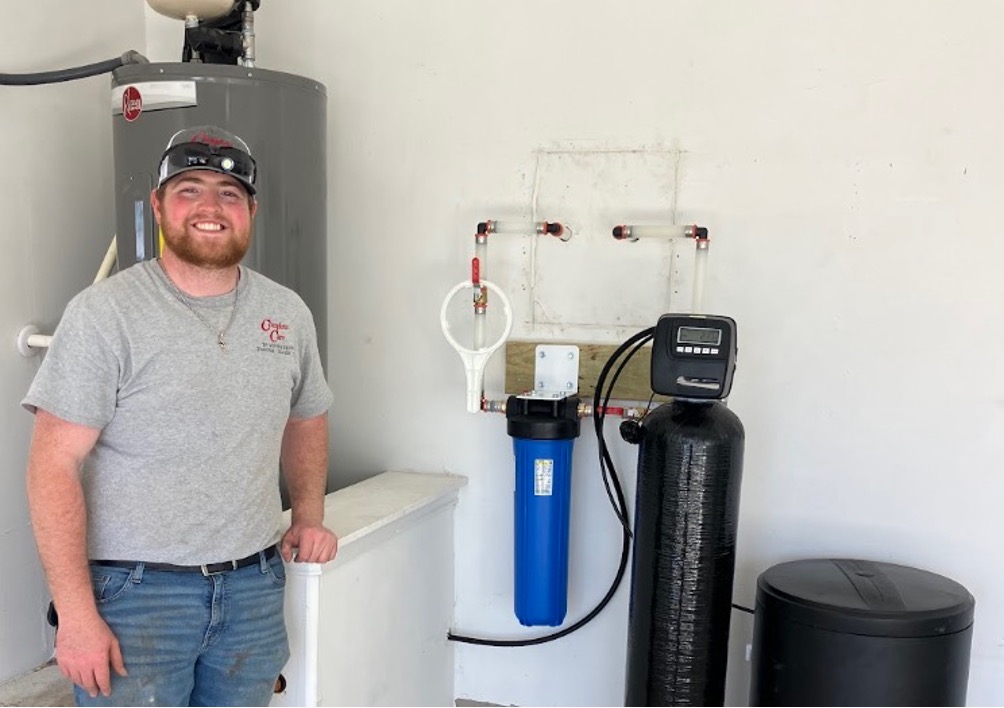
A strong HVAC review profile never comes from a single campaign. It comes from asking every customer on the day of service, replying within a day, and keeping the ask embedded in whatever system already touches every job, dispatch, invoicing, or payment. Owners who treat it as a routine rather than a project keep their rating and their search visibility steady through every peak season.
At Core Growth Group, we work with HVAC and plumbing owners across Dallas-Fort Worth, Houston, Austin, and San Antonio on the operating systems behind numbers like these, including review routines. Whether you’re building toward growth, preparing to sell, or ready for an exit, a documented reputation record only strengthens your position. Start the conversation with us today.
Frequently Asked Questions (FAQs)
How long does it take to raise an HVAC company’s star rating?
Raising a rating is arithmetic. A profile at 4.2 stars across 100 reviews needs roughly 60 consecutive five-star reviews to reach 4.5. At 15 new reviews a month, that is four months of uninterrupted collection and consistent service.
Is review management software worth it for an HVAC company?
It becomes worthwhile once manual follow-up stops happening reliably, usually in the low hundreds of jobs a month. Software handles message timing, multi-platform routing, and response reminders. Below that volume, a documented process in existing dispatch software can produce comparable results.
Can a fake or malicious HVAC review be removed?
Platforms remove reviews that breach policy, including postings from people who were never customers, competitor content, and conflict-of-interest reviews. Report them through the platform dashboard with supporting details such as job records and invoice dates. Reviews describing genuine dissatisfaction stay up.
Do online reviews affect what an HVAC business sells for?
Reviews affect valuation indirectly. Buyers read profiles as evidence of service consistency, customer retention, and reputational risk. Service businesses near $5 million in revenue generally trade between 2x and 4x EBITDA, and review performance helps support the upper end.
How does Core Growth Group work with HVAC owners?
At Core Growth Group, we are a strategic acquirer, not a broker. We work directly with HVAC and plumbing business owners looking to sell, focusing on companies across Dallas-Fort Worth, Houston, Austin, and San Antonio.
*Disclaimer: This content is for informational purposes only and should not be considered business, financial, legal, or tax advice. Results vary based on market conditions and individual business circumstances. To learn more about scaling, preparing, or exiting your business, visit Core Growth Group.
Want to Know What Your Company Could Be Worth?
Answer a few quick questions so Clint can understand where your company is today and what next step may make the most sense.
Get Company Valuation