
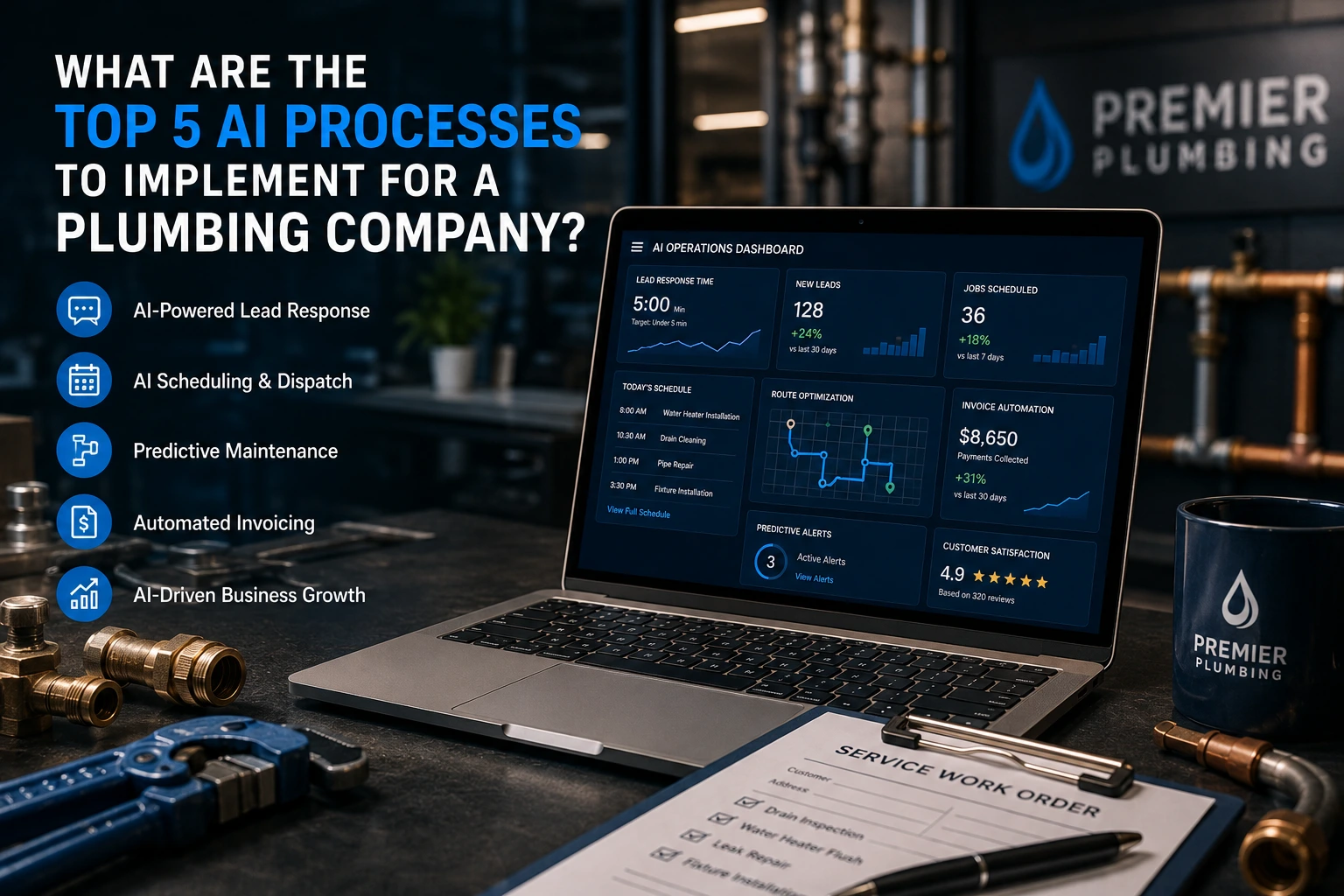
Key Takeaways
- Five-minute lead response times powered by AI can increase lead qualification rates by 2,100%, giving plumbing companies a massive competitive advantage
- AI-powered scheduling and route optimization can increase daily service calls by 25-35% while reducing fuel costs by 15-20%
- Predictive maintenance using IoT sensors shifts businesses from reactive repairs to proactive service contracts, reducing equipment downtime by 30-50%
- Automated invoicing and payment processing can accelerate cash flow by getting payments 10-14 days faster
- The strategic implementation of these five AI efficiencies can drive 20%+ annual growth for plumbing businesses
1. Five-Minute Lead Response Increases Qualification by 2,100%
The plumbing industry operates on urgency. When pipes burst or water heaters fail, customers need immediate solutions. Research from MIT and Harvard shows a shocking truth: lead qualification rates plummet dramatically after the first five minutes of initial contact. This isn’t just about customer service—it’s about capturing revenue that would otherwise flow to competitors.
Your Competitive Advantage to Growth
Most plumbing companies still rely on outdated systems where leads sit in voicemail boxes for hours or even days. While competitors struggle with manual processes, AI-powered lead response creates an insurmountable competitive moat. The difference between a five-minute response and a two-hour response isn’t marginal—it’s transformational.
You’re Bleeding Edge to Lead and Be the Desired Company in Your Market
Early adopters of AI technology position themselves as the premium choice in their markets. Customers associate rapid, professional responses with quality service delivery. Core Growth Group’s Growth Operating System case studies show that plumbing companies consistently achieve 30% growth within 12 months by implementing these technological advantages.
Your Path to Be the #1 Brand in Your Service Area
Market leadership isn’t achieved through luck—it’s earned through systematic advantages. Companies that respond fastest, schedule efficiently, and deliver predictably become the go-to choice for both residential and commercial customers. This creates a virtuous cycle where superior service leads to more referrals, higher prices, and ultimately, market dominance.
2. AI-Powered Lead Management and Qualification
AI-Driven Lead Response and Initial Contact
The ‘Ai5’ (Answer In 5) system ensures every plumbing lead receives professional contact within five minutes, regardless of time or day. This automated response capability handles initial customer contact, gathers project details, and begins the qualification process before human technicians even know a lead exists. Accurate Plumbing Services in Houston achieved a 40% reduction in advertising costs and doubled their qualified bookings within three months of implementing AI voice and chat agents.
Automated Lead Qualification and Scoring
AI lead qualification transforms how plumbing companies prioritize prospects. Advanced algorithms analyze project type, urgency level, budget indicators, and customer history to score leads automatically. Case studies of plumbing companies using AI lead scoring have shown conversion rate improvements from 12% to 47% by ensuring the most qualified prospects receive immediate attention while lower-priority inquiries are managed efficiently through automated workflows.
3. AI-Powered Smart Logistics and Field Operations
AI Scheduling, Dispatch, and Route Optimization
Traditional scheduling relies on human intuition and basic geographical proximity. AI-powered scheduling considers dozens of variables simultaneously: technician skills, job complexity, customer preferences, parts availability, and real-time traffic conditions. This sophisticated approach to workforce management eliminates the guesswork that costs plumbing companies thousands in inefficiencies.
Real-Time Traffic and Job Complexity Optimization
Modern AI systems integrate with traffic APIs, weather data, and historical job performance metrics to create optimal daily routes. The system automatically adjusts for unexpected delays, emergency calls, and changing conditions throughout the day. One mid-sized plumbing company reclaimed 15 hours of technician productivity per week by using AI to optimize resource allocation and technician skill-matching.
Optimize technician routes and reduce fuel costs by 15-20%
Fuel represents a significant operational expense for plumbing companies. AI route optimization slashes these costs by 10-20% while improving technician delivery times by 25-30%. The system accounts for real-time traffic patterns, job duration estimates, and optimal sequencing to minimize drive time and maximize billable hours.
Increase daily service calls by 25-35% through intelligent allocation
Intelligent scheduling allows technicians to complete more jobs daily without working longer hours. By eliminating inefficient routes and reducing travel time, companies consistently see 25-35% increases in daily service calls. This improvement directly translates to higher revenue without proportional increases in labor costs.
Reduce emergency response times by 15-25%
Emergency plumbing situations command premium pricing, but only when response times meet customer expectations. AI dispatch systems reduce emergency response times by 15-25% by instantly identifying the closest available technician with appropriate skills and directing them via optimized routes. This capability positions companies as the reliable choice for urgent situations.
4. Predictive Maintenance with IoT Integration
IoT Sensors and AI Analytics for Equipment Monitoring
IoT sensors installed on water heaters, sump pumps, and other critical equipment collect continuous performance data. AI analytics process this information to identify patterns that precede equipment failures. Smart plumbing systems integrated with AI leak detection can reduce residential water waste by up to 20%, providing a high-value upsell for eco-conscious customers.
Shifting from Reactive Repairs to Proactive Service
Predictive maintenance fundamentally changes the plumbing business model. Instead of waiting for emergency calls, companies proactively schedule maintenance based on AI predictions. This approach generates more predictable revenue streams while building stronger customer relationships through preventive care rather than crisis response.
Reduce equipment downtime by 30-50%
Predictive algorithms using IoT sensors can reduce unexpected plumbing equipment failures by up to 50%. Early detection allows for planned maintenance during convenient windows rather than emergency repairs during inconvenient times. This reliability improvement strengthens customer loyalty and reduces warranty claims.
Extend asset lifespan by up to 40%
Proper maintenance timing based on actual equipment condition rather than arbitrary schedules extends asset lifespans significantly. Customers save money on premature replacements while plumbing companies capture more service revenue over each asset’s extended lifecycle.
Generate recurring revenue through proactive service alerts
Proactive maintenance alerts create natural opportunities for recurring service contracts. Customers appreciate the peace of mind that comes with monitored equipment, and plumbing companies benefit from predictable monthly revenue that isn’t dependent on emergency situations or seasonal fluctuations.
5. Automated Financial Operations
AI-Powered Invoicing and Payment Processing
Cash flow challenges plague many plumbing businesses due to manual invoicing processes and inconsistent payment collection. AI-powered invoicing agents can reduce the time spent on billing from an average of 10 days to just 2 days, resulting in improved working capital through accelerated billing cycles. Automated systems generate invoices immediately upon job completion and manage follow-up communications systematically.
Accelerating Cash Flow and Reducing Administrative Time
Automated financial operations eliminate the administrative bottleneck that delays payments. Digital invoices are generated instantly, payment reminders are sent automatically, and processing fees are optimized based on customer payment preferences. This systematic approach ensures consistent cash flow without requiring dedicated administrative staff.
Get paid 10-14 days faster with automated invoicing follow-ups
Consistent follow-up communication accelerates payment collection significantly. Automated systems send payment reminders at optimal intervals, offer convenient payment options, and escalate appropriately for overdue accounts. Companies implementing these systems typically see payments arrive 10-14 days faster than manual processes.
Reduce insurance premiums 10-15% with AI fleet safety monitoring
AI-powered fleet monitoring systems track driving behaviors, route efficiency, and maintenance schedules. Insurance companies recognize these safety improvements and often reduce premiums by 10-15% for companies demonstrating consistent safety performance through AI monitoring systems.
Growth Operating System Can Help Achieve Significant Business Growth
The strategic implementation of these five AI efficiencies creates compounding advantages that drive sustainable business growth. Companies that master AI lead response, intelligent scheduling, predictive maintenance, and automated billing position themselves for significant market share gains and premium valuations when exit opportunities arise.
The integration of these technologies requires systematic implementation and ongoing optimization. Success depends on choosing solutions that work together seamlessly rather than implementing isolated point solutions that create operational complexity.
For plumbing business owners ready to implement these growth-driving AI efficiencies, Core Growth Group specializes in helping plumbing companies achieve 20%+ annual growth through their integrated Growth Operating System and AI technology framework.
Want to Know What Your Company Could Be Worth?
Answer a few quick questions so Clint can understand where your company is today and what next step may make the most sense.
Get Company Valuation