
Key Takeaways
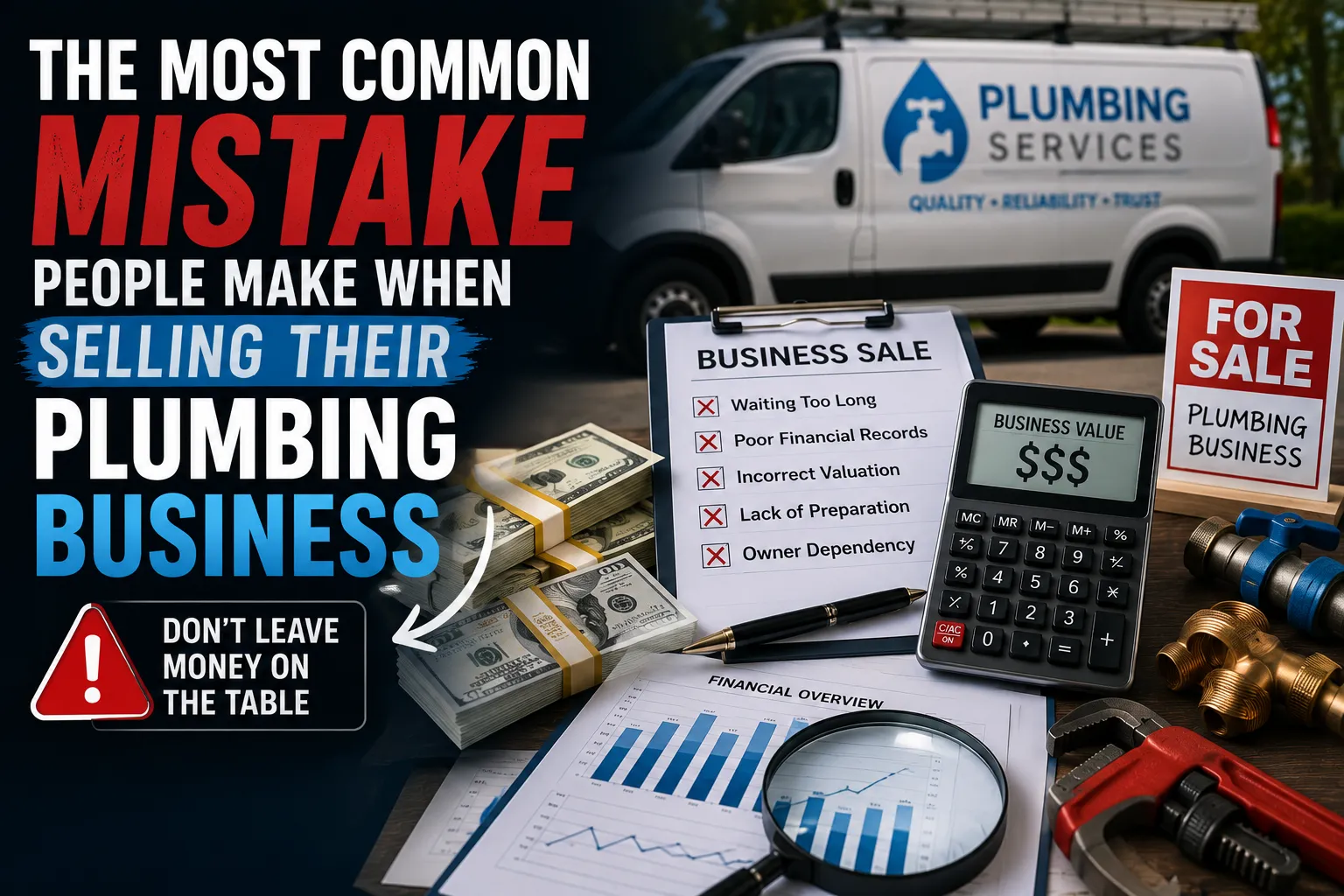
- The biggest mistake in selling a plumbing business is waiting too long to start preparation, which leads to rushed sales and lower valuations
- Disorganized financial records for the past three years can scare away qualified buyers or reduce offers by 10-30%
- Plumbing businesses typically sell for varying multiples depending on size, profitability, and market position, with EBITDA multiples ranging from 2.0x to 11x
- Working with M&A advisors prevents owners from leaving significant value on the table during negotiations
- Starting exit planning 12-24 months early allows time to optimize operations and reduce owner dependency
Every plumbing business owner dreams of a successful exit that rewards years of hard work and investment. Yet the most profitable sales don’t happen by accident—they result from careful planning and strategic preparation that begins long before the “For Sale” sign goes up.
Rushing Into a Sale: The Costliest Error
The most frequent error plumbing business owners make is delaying preparation until they desperately need to sell. Whether driven by burnout, health issues, or market pressures, owners who wait until the last minute find themselves at a severe disadvantage. Buyers can sense desperation, and they’ll use that urgency to negotiate lower prices and less favorable terms.
This lack of preparation and failure to understand the preparation timeline that leads to a successful exit at a gratifying price for you the seller, is the #1 biggest mistake. When you’re thinking about selling you’ve probably already waited too long.
The kind of preparation I’m talking about includes:
- Preparing your plumbing company’s growth story + telling that story in a compelling, concise way.
- Your vision for your company that you’ve started achieving + a trend the buyer can clearly see to fully achieve your vision.
- Your clean + verifiable financials.
- Your growth rate + preferably acceleration of that growth rate.
This rushed approach that lacks the required preparation + preparation timeline typically costs you, the owner, significant money. When preparation time is compressed into just a few months, there’s no opportunity to address operational weaknesses, clean up financial records, or position the business strategically. The result? A fire sale that leaves substantial value on the table.
Smart plumbing business owners recognize that preparation isn’t just about paperwork—it’s about maximizing enterprise value. Companies like Core Growth Group specialize in helping business owners optimize their operations and financials well before they enter the market, ensuring maximum valuation when the time comes to sell.
Unprepared Financials Scare Away Buyers
Nothing kills a potential sale faster than disorganized or incomplete financial records. Buyers expect transparency and professional documentation, and any red flags in the books can either sink the deal entirely or justify a significantly lower offer.
Three Years of Clean Financial Records
Buyers typically request detailed financial documentation spanning multiple years. The required documents include profit and loss statements, balance sheets, and cash flow statements for the past three years, plus business tax returns for three to five years. Bank statements verify reported transactions, while payroll records and employment tax reports for the last three years demonstrate proper labor management.
The quality of these records directly impacts buyer confidence. Clean, well-organized financials suggest professional management and reduce perceived risk. Conversely, incomplete or inconsistent records raise questions about business practices and often lead to lower valuations or withdrawn offers.
Separating Personal and Business Expenses
Many plumbing business owners intermingle personal and business expenses, especially in smaller operations. While this practice might simplify day-to-day management, it creates serious problems during a sale. Buyers need to see clear business performance without the confusion of personal transactions.
The solution involves working with a qualified CPA to separate and normalize financial statements. Personal expenses should be clearly identified and adjusted out of EBITDA calculations. This process not only improves buyer confidence but often reveals the true profitability of the business, sometimes increasing valuations substantially.
Getting Your Valuation Wrong
Incorrect business valuation represents one of the most expensive mistakes plumbing business owners make. Setting the price too high scares away potential buyers, while pricing too low leaves money on the table. Many owners rely on outdated rules of thumb or industry gossip rather than professional analysis.
Understanding EBITDA Multiples for Plumbing
EBITDA multiples for plumbing businesses vary significantly based on business size, market position, and operational efficiency. Larger, more established plumbing companies may command EBITDA multiples between 6x and 11x, while smaller residential operations typically trade at 2.0x to 3.0x EBITDA. Mid-market companies often see multiples around 4x, though this depends heavily on specific business characteristics.
The key factors that drive higher multiples include steady revenue streams, strong profitability history, and positive future earning projections. Businesses with diversified service offerings, emergency plumbing capabilities, or maintenance contracts often achieve premium valuations because they demonstrate recurring revenue potential.
Revenue Multiples vs EBITDA Multiples
While EBITDA multiples provide the most accurate valuation framework, many buyers also consider revenue multiples as a secondary measure. Revenue multiples for plumbing businesses can range widely, with some sources citing 0.34 to 0.66 times annual revenue, though this varies considerably based on profitability and market conditions.
However, revenue multiples can be misleading because they don’t account for profitability differences between businesses. A company with higher margins will naturally command a premium over one with lower margins, even if revenues are similar. Professional valuation considers both metrics alongside operational factors to determine fair market value.
Choosing the Wrong Buyer
Not all buyers are created equal, and accepting the first offer often leads to problems down the road. The wrong buyer can derail deals during due diligence, create post-sale operational disruptions, or fail to complete earnout payments as promised.
Strategic vs Financial Buyers
Strategic buyers understand the plumbing industry and typically offer better terms because they recognize operational synergies and brand value. These buyers might be larger plumbing companies, home services consolidators, or related industry players looking to expand their footprint.
Financial buyers, such as private equity groups, focus primarily on financial returns and may not appreciate industry-specific value drivers. While they can provide competitive offers, strategic buyers often pay premiums for businesses that complement their existing operations or provide geographic expansion opportunities.
Vetting for Cultural Fit
Beyond financial considerations, cultural fit matters enormously for successful transitions. Buyers who don’t understand plumbing industry culture may implement changes that damage employee morale, customer relationships, or operational efficiency. This risk is particularly acute when selling to financial buyers unfamiliar with service industry dynamics.
Smart sellers investigate potential buyers’ track records with previous acquisitions. How did they treat existing employees? Did they maintain service quality? Were earnout payments made as promised? These factors often matter more than the initial purchase price for long-term success.
Going Solo Costs You Money
The complexity of business sales makes professional guidance necessary, yet many plumbing business owners attempt to handle the process independently. This approach consistently leads to suboptimal outcomes and missed opportunities.
Leaving Value on the Table
Owners who try to sell their businesses without professional guidance often leave substantial enterprise value on the table. Industry sources suggest this can range from 10-30% of potential value, though the exact amount varies by transaction complexity and market conditions. They may underprice their businesses, overlook red flags during negotiations, or fumble deal terms that affect final payouts.
The reasons are straightforward: business sales involve complex legal, financial, and strategic considerations that most owners encounter only once in their careers. Professional advisors handle these transactions regularly and understand market conditions, buyer motivations, and negotiation tactics that maximize seller outcomes.
What M&A Advisors Bring to the Table
Experienced M&A advisors provide market knowledge, buyer networks, and deal expertise that individual owners simply cannot match. They understand current market conditions, know which buyers are actively acquiring plumbing businesses, and can structure deals to minimize tax implications while maximizing seller benefits.
Professional advisors also maintain confidentiality throughout the process, preventing operational disruptions and maintaining customer trust during the sale period. They handle time-consuming due diligence requests, allowing owners to continue running their businesses effectively while the sale progresses.
Start Your Exit Planning 12-24 Months Early
The most successful plumbing business sales begin with extensive advance planning. Starting the preparation process 12-24 months before listing creates opportunities to address weaknesses and maximize value that simply don’t exist in compressed timeframes.
Optimize Financials and Operations
Extended preparation time allows owners to clean up financial records, implement better operational systems, and demonstrate consistent performance over multiple reporting periods. Buyers value stability and predictability, both of which require time to establish and document.
This period also enables strategic improvements that increase business value. Expanding service offerings like emergency plumbing or maintenance contracts can significantly boost business appeal. Building a well-established brand with positive customer reviews creates additional market value that buyers willingly pay premiums to acquire.
Reduce Owner Dependency
Businesses that depend heavily on owner involvement are inherently less valuable because they create transition risks for buyers. The preparation period provides time to develop management systems, train key employees, and document operational procedures that enable the business to function independently.
Reducing owner dependency also allows for smoother transitions post-sale. Buyers prefer businesses where the owner can step back gradually rather than being required for daily operations. This transition approach often results in better earnout performance and long-term business success.
Time the Market Favorably
Market conditions significantly impact sale outcomes, and advance planning provides flexibility to time the sale strategically. Economic cycles, industry trends, and seasonal factors all influence buyer appetite and pricing multiples.
For example, a plumbing company in Florida successfully timed its sale to an international buyer who was actively seeking North American expansion opportunities. The owner had made operational improvements and secured a professional valuation well before marketing began, enabling the company to command premium pricing when market conditions aligned favorably.
Core Growth Group helps plumbing business owners navigate these complex preparation and sale processes to achieve optimal outcomes.
Want to Know What Your Company Could Be Worth?
Answer a few quick questions so Clint can understand where your company is today and what next step may make the most sense.
Get Company Valuation